


nguoiduatin-blog |
LƯỢT XEM: 20
Sublimation printing is a fantastic way to create vibrant, full-color designs on fabrics and other materials. However, achieving the best results from sublimation requires more than just a great design and high-quality materials. One of the most critical factors in ensuring that your sublimation project is a success is understanding sublimation heat press temperatures.
At Ao Dong Luc, we know how important it is to get your sublimation heat press settings just right. Whether you’re creating custom T-shirts for a business event or personalized apparel for a special occasion, the right temperature can make all the difference. In this comprehensive guide, we will explore everything you need to know about sublimation heat press temperatures, including recommended settings, tips, and common mistakes to avoid.
What Is Sublimation Printing?
Before diving into the specifics of sublimation heat press temperatures, it’s essential to understand what sublimation printing is and why temperature is so critical.
Sublimation printing is a process that uses heat to transfer dye onto materials such as polyester fabrics, ceramics, and metals. Unlike traditional ink printing, sublimation doesn’t involve ink sitting on top of the material. Instead, the dye turns into a gas when exposed to high temperatures and permeates the material, resulting in vibrant, long-lasting prints.
The heat press is the key tool in this process, and the temperature you set it to plays a major role in determining the quality of your transfer.
The Ideal Sublimation Heat Press Temperatures
The General Temperature Range for Sublimation
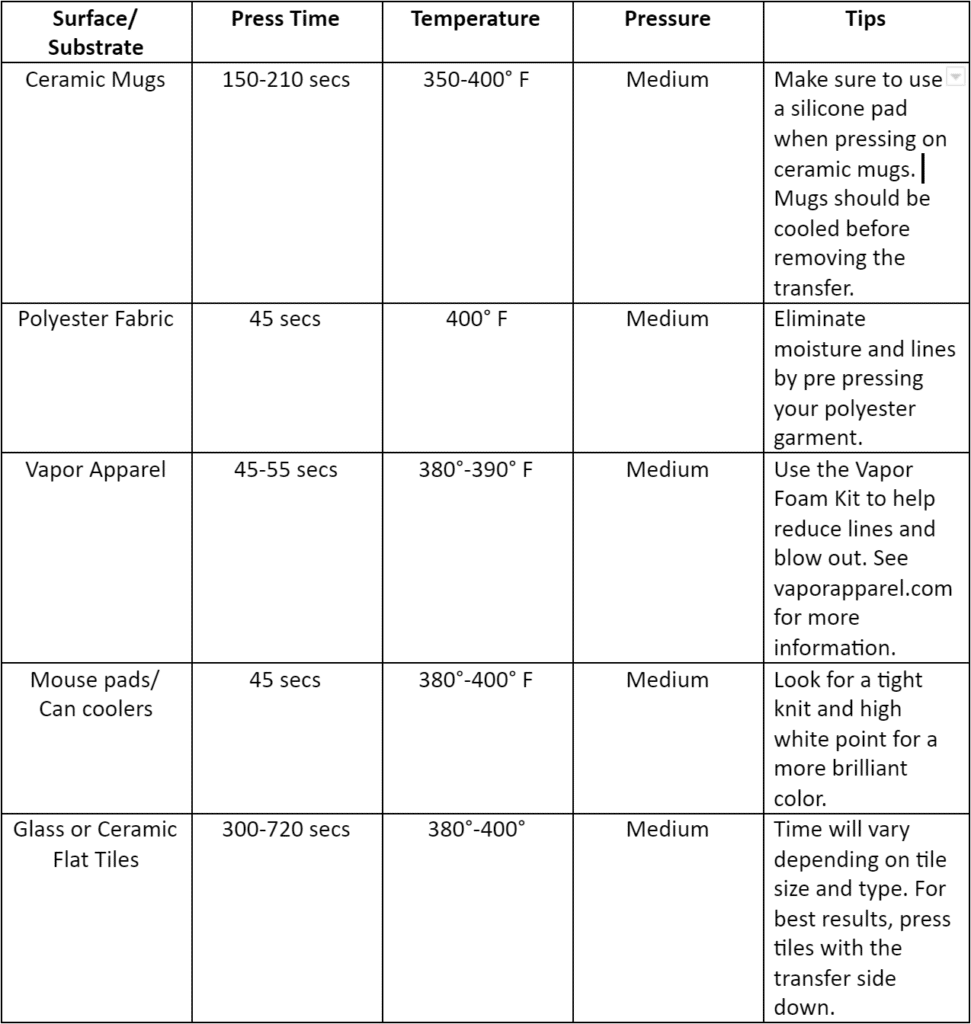
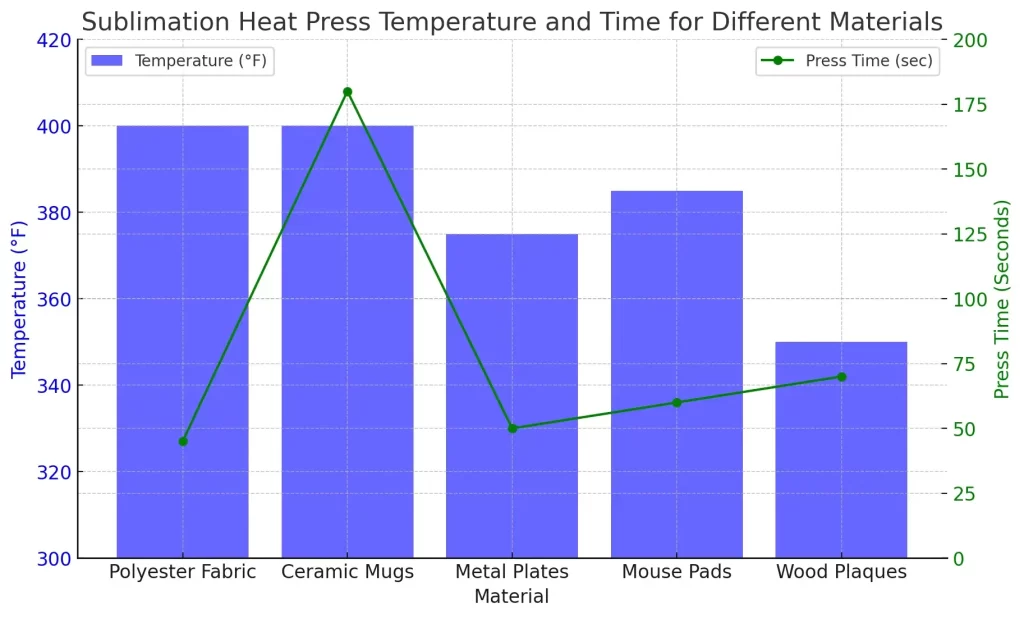
When it comes to sublimation printing, the temperature range is usually between 375°F and 400°F (190°C – 204°C). This range is optimal for most materials, especially polyester fabrics, which are the most common substrate for sublimation.
- T-shirts and Apparel: The standard temperature for sublimating on T-shirts, especially those made of polyester, is around 385°F (196°C) for 40-60 seconds.
- Mugs and Tumblers: For ceramic mugs, the recommended temperature is typically 360°F (182°C), with pressing times of about 2-3 minutes, depending on the type of heat press used.
- Metal Surfaces: If you are sublimating onto metal, the temperature should generally be around 375°F to 400°F (190°C – 204°C). The pressing time can vary depending on the thickness and type of metal.
Temperature for Different Materials
Not all materials require the same heat press settings. Here’s a breakdown of recommended settings for different materials:
- Polyester Fabrics: As mentioned, 375°F to 400°F (190°C – 204°C) is the ideal temperature. Polyester absorbs sublimation ink beautifully, giving vibrant colors and sharp details.
- Cotton Fabrics: Sublimation doesn’t work well with cotton fabrics because cotton doesn’t allow the sublimation ink to permeate. If you’re attempting sublimation on cotton blends (e.g., 50/50 cotton-polyester), a slightly lower temperature of around 350°F may yield better results.
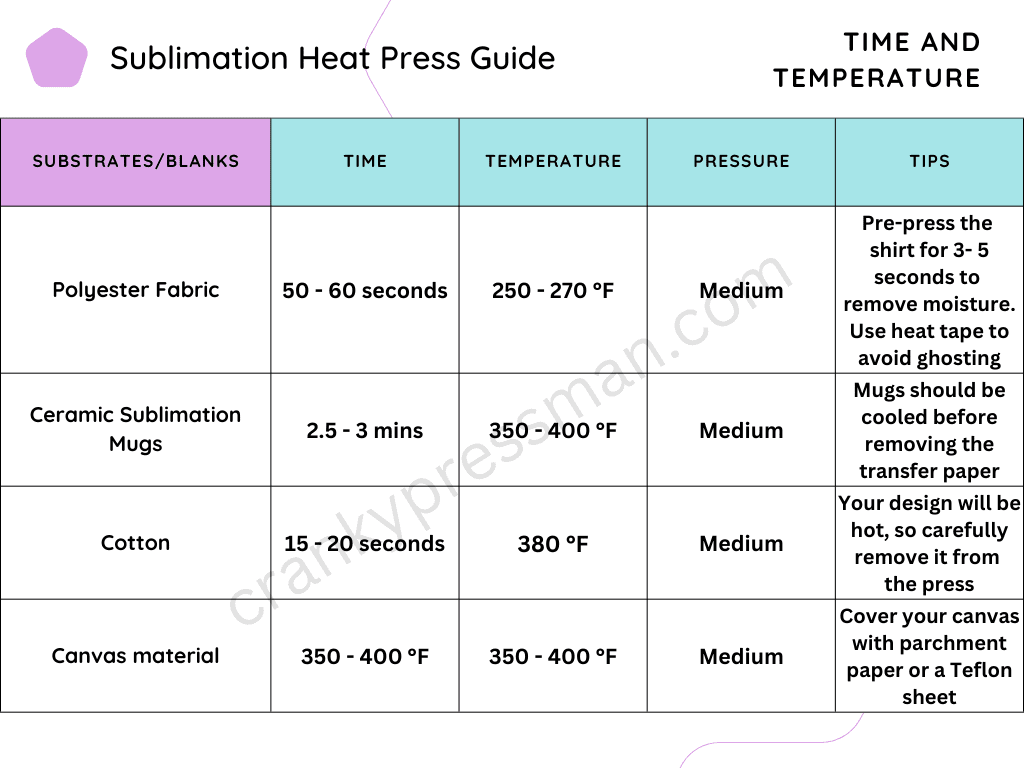
- Ceramic Mugs and Tumblers: For sublimating mugs and tumblers, the optimal temperature is 360°F (182°C) for about 2-3 minutes. Always use a mug press to ensure even heating.
Sublimation Heat Press Time and Pressure
In addition to temperature, time and pressure are two other factors that can influence the outcome of your sublimation project.
- Time: The ideal time for sublimating most materials typically falls between 30 seconds and 2 minutes, depending on the substrate and heat press used.
- Pressure: Medium to heavy pressure is typically required for successful sublimation. If the pressure is too low, the transfer won’t be consistent. The right pressure ensures that the transfer paper is pressed evenly against the material for the best possible results.
Fine-Tuning Your Settings
Sometimes, your sublimation heat press temperatures might need some fine-tuning, especially if you’re working with unique materials or custom shapes. It’s always best to start with the recommended settings and adjust them slightly based on your results. For example, if you’re printing on thicker fabrics or materials, you may need to increase the pressure or extend the pressing time to get the best transfer.
Common Mistakes to Avoid in Sublimation Heat Pressing
When working with sublimation heat press temperatures, there are several common mistakes that can lead to poor results. At Ao Dong Luc, we want to ensure you avoid these pitfalls:
- Incorrect Temperature: One of the biggest mistakes in sublimation is setting the temperature too high or too low. If the temperature is too low, the sublimation ink won’t transfer correctly. If it’s too high, you risk damaging the material or causing colors to bleed.
- Inconsistent Pressure: Even pressure is critical for a successful transfer. If the heat press isn’t evenly distributing pressure across the material, you could end up with an uneven print or a design that’s faded in some areas.
- Incorrect Time: Leaving the press on for too long can burn your material or cause ink to smudge. Conversely, pressing for too short a time will result in a faded or incomplete transfer.
Tips for Achieving Perfect Sublimation Results
Now that you have an understanding of the ideal sublimation heat press temperatures, here are some tips to help you achieve the best results every time:
Use Quality Materials
The best sublimation results come from using high-quality materials. Make sure your fabric or item is made of polyester or a polyester blend for the most vibrant and durable results. At Ao Dong Luc, we only use high-quality fabrics to ensure your custom T-shirts look and feel great.
Preheat Your Heat Press
Preheating your heat press ensures that the material is already at the desired temperature when you begin pressing. This helps maintain consistent results, especially when pressing multiple items.
Use the Right Accessories
Using accessories like Teflon sheets and sublimation paper can protect both your material and your heat press. Teflon sheets are great for preventing ink bleed, while sublimation paper holds the design in place during the transfer process.
Test Your Settings
Before pressing your full batch of items, always test your heat press settings on a scrap piece of material. This gives you a chance to adjust the time, temperature, and pressure before you start working on the actual products.
Conclusion
In conclusion, sublimation heat press temperatures are a critical factor in achieving vibrant, durable, and high-quality sublimation prints. At Ao Dong Luc, we understand the importance of getting the right settings for your specific project, whether you’re sublimating T-shirts, mugs, or other items. By following the guidelines we’ve provided in this article, you can ensure that your sublimation projects are a success every time.
Remember, the ideal temperature range for most sublimation projects is 375°F to 400°F (190°C – 204°C). Adjust the pressure and time accordingly, and always use the right materials and accessories for the best results. Happy sublimating!

